
Iconic Design Series: The Wishbone Chair
The Wishbone chair by
Hans Wegner remains popular for its authentic expression of Danish design
Think of Scandinavian furniture, and the Wishbone Chair comes to mind. The work of Danish designer Hans J. Wegner, it has been in production since 1950. While it has a distinctive look that is Scandinavian, the story of this Danish furniture is a surprising tale of finding inspiration in other cultures.
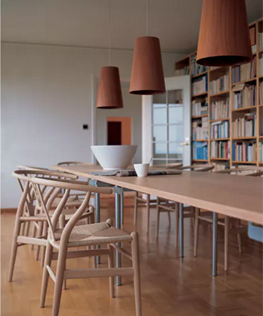
In 1943, at the age of 29, Wegner had opened his own
drawing office. Wegner, by then, had developed his skills as a cabinet maker in
his teens, trained as an architect and then designed furniture. Soon after, he
came across portraits of Danish merchants, which sparked his imagination. What
drew his attention were the Chinese Ming Chairs they were seated on.
The Ming Chair came from China’s Ming era that lasted
from the 14th to 17th century. It is recognised by the
graceful arms that sweep across the back and the splat, which is the vertical
piece at the back, that functions as decoration and support.
That began his work on a series of chairs. In 1944, he
produced the first design, the “Chinese Chair”. It was handcrafted in cherry
wood. But it was the last of the series, said to be much less costly than the
first and intended for mass production, that struck a chord with furniture
lovers. The pioneering designer’s constant refinement of the series culminated
in the Wishbone Chair in 1949.
The Design
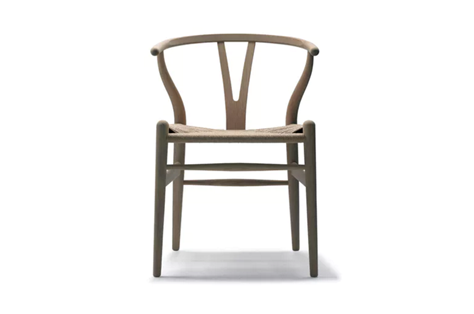
Its characteristic “Y” splat at the back and the pared
down steam-bent arms exemplify the designer’s pursuit of simplicity. For its
seat, Wegner conceptualised a seat made of durable 120m-long paper cord. It requires
a skilled craftsman about one hour to weave by hand.
Wegner was a master carpenter. And he incorporated his
deep understanding of wood joinery to create a chair with exacting construction
that belies its unpretentious design. The easy appearance of the chair not only
works perfectly in Scandinavian interiors, but it also blends easily with
minimalist, industrial, modern, Japanese interiors. Among others styles, too,
it is a hot favourite for the eclectic home.
The Legacy
Wegner’s passion for designing chairs – he designed
more than 500 chairs in his lifetime – contributed immensely to the reputation
of Danish design. He also garnered multiple design awards, and the enduring
title ‘the Master of the Chair’. The Wishbone Chair is said to be Wegner’s most
celebrated work. Having been in constant production for more than 50 years has
earned it iconic status. Thanks to its emphasis on comfort and functionality,
and its distinct design, it is a classic piece that exemplifies modern Danish
design.
Photos via Space Furniture